Modern Art & Innovation in Durga Puja
15th June, 2026
How Bengal Reimagined Creativity for the World
When people think of Durga Puja today, they often imagine towering thematic pandals, immersive lighting installations, experimental idols, and streets transformed into open-air art galleries. But this creative explosion did not emerge overnight.
The roots of modern artistic innovation in Durga Puja can be traced back to the 1960s — a period when Bengal itself was redefining its identity on the global stage through literature, cinema, architecture, politics, theatre, and fine arts.
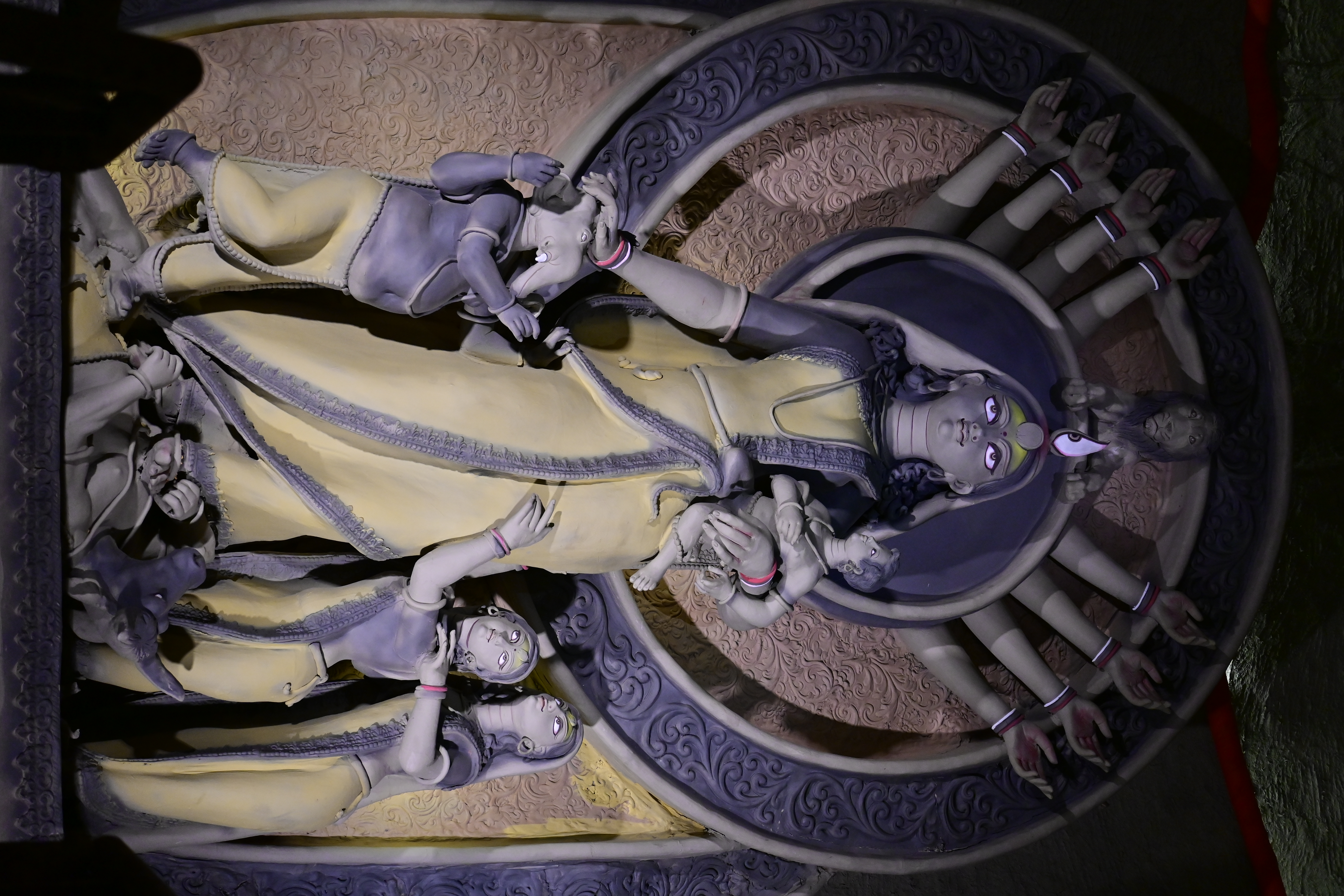
Durga Puja became more than a religious celebration. It evolved into Bengal’s largest public canvas for experimentation, modern art, and collective imagination.
The 1960s: When Pandals Became Spatial Art
Before the 1960s, most Durga Puja pandals followed traditional structures inspired by temples, zamindar courtyards, or simple decorative canopies. The emphasis was primarily devotional.
But as urban Kolkata expanded and public participation increased, artists and organizers began asking a revolutionary question:
“What if a puja pandal itself could become an artistic experience?” This idea changed everything.
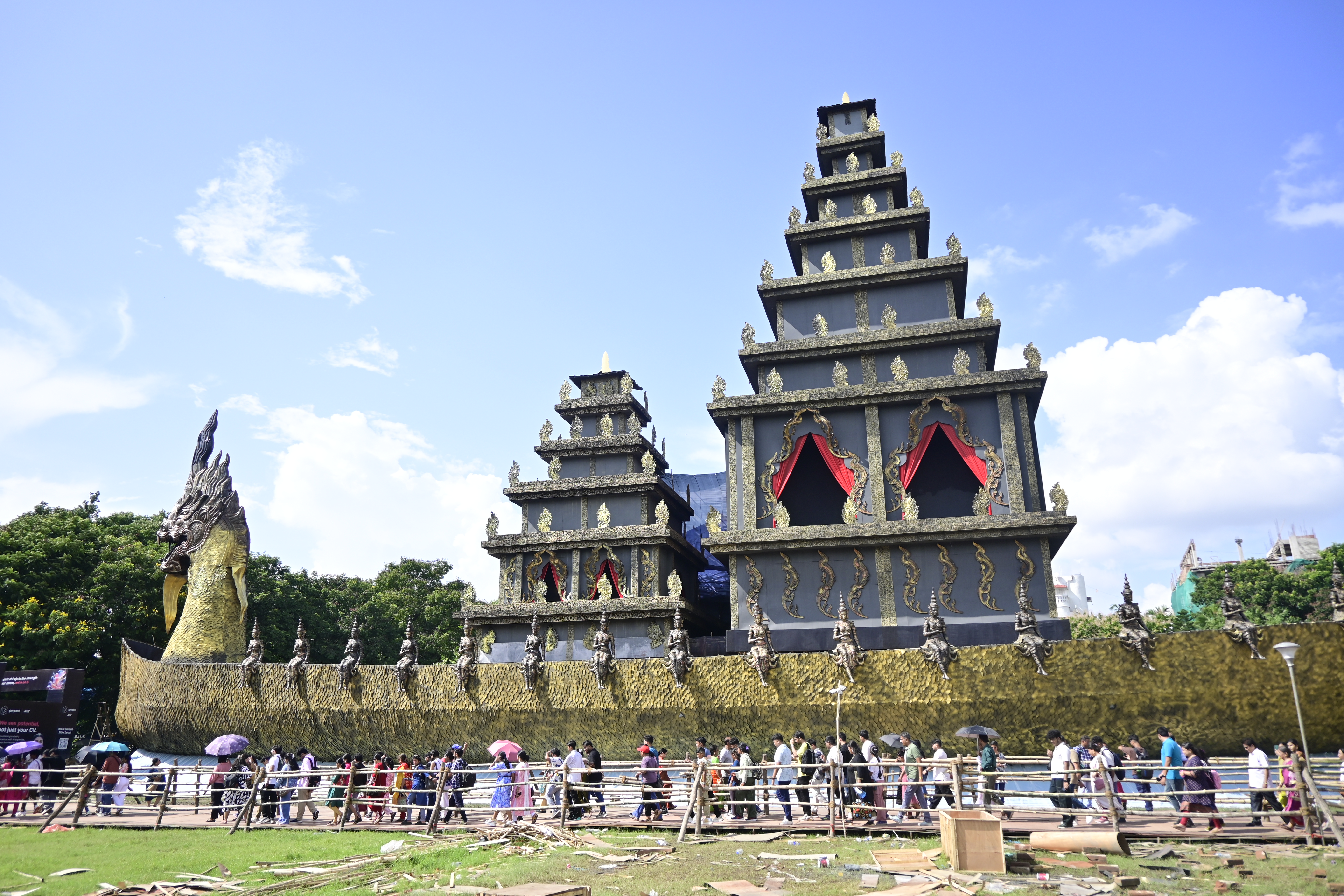
Thematic spatial design slowly emerged. Instead of merely constructing a shelter for the idol, clubs began creating environments. Bamboo, cloth, wood, jute, and handmade materials were transformed into storytelling spaces.
Visitors no longer simply “visited a puja.” They entered an experience.
This transformation mirrored Bengal’s larger intellectual climate of the time. The 1960s Bengal was witnessing:
- The global recognition of Bengali cinema through filmmakers like Satyajit Ray
- Growth of modernist architecture and urban design
- Experimentation in theatre and fine arts
- Expansion of literary and political thought
- Rising middle-class cultural participation
Durga Puja naturally absorbed these creative energies.
The pandal became Bengal’s public art installation decades before the term became fashionable globally.
Innovation in Lighting: Bengal Illuminates the Streets
Once pandals evolved into immersive spaces, another artistic revolution followed — lighting.
Chandannagar, already famous for its electrical craftsmanship, became central to this transformation. Traditional decorative bulbs gradually evolved into moving light animations, storytelling displays, synchronized sequences, and massive illuminated street installations.
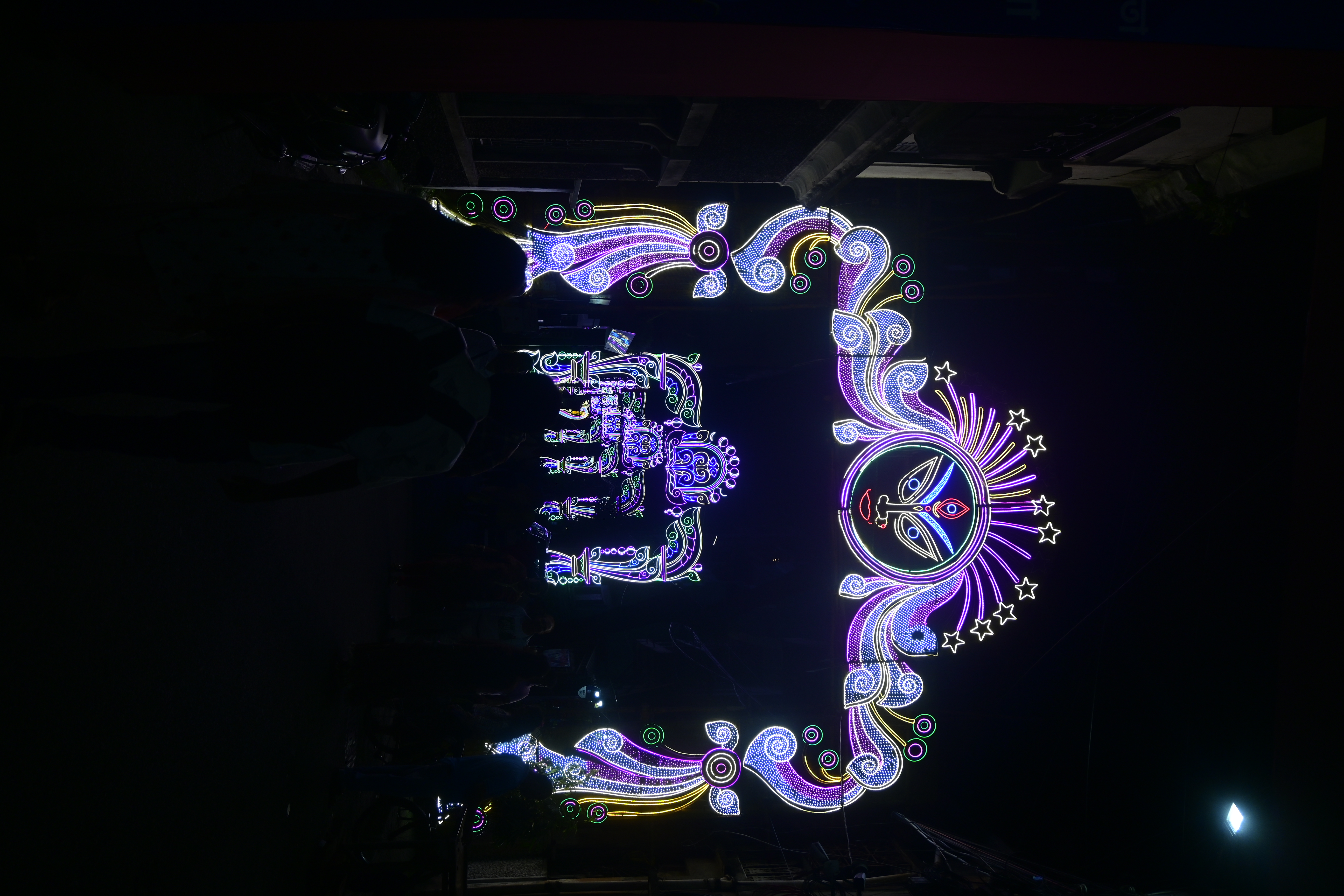
By the 1970s and 1980s, lighting itself had become an independent art form.
Entire neighborhoods competed not just in idol beauty or pandal size, but in visual spectacle. Roads became glowing rivers of creativity. Dynamic lighting depicted mythology, politics, sports, cinema, and social messages.
This was not merely decoration. It was technological folk art.
At a time when India was still developing industrially, Bengal’s lighting artists were already experimenting with mechanical sequencing, motion effects, and large-scale public visual design using limited resources.
The innovation reflected Bengal’s enduring ability to merge craftsmanship with intellect — engineering with emotion.
The Rise of Theme-Based Idols
The next major transformation came through idols themselves.
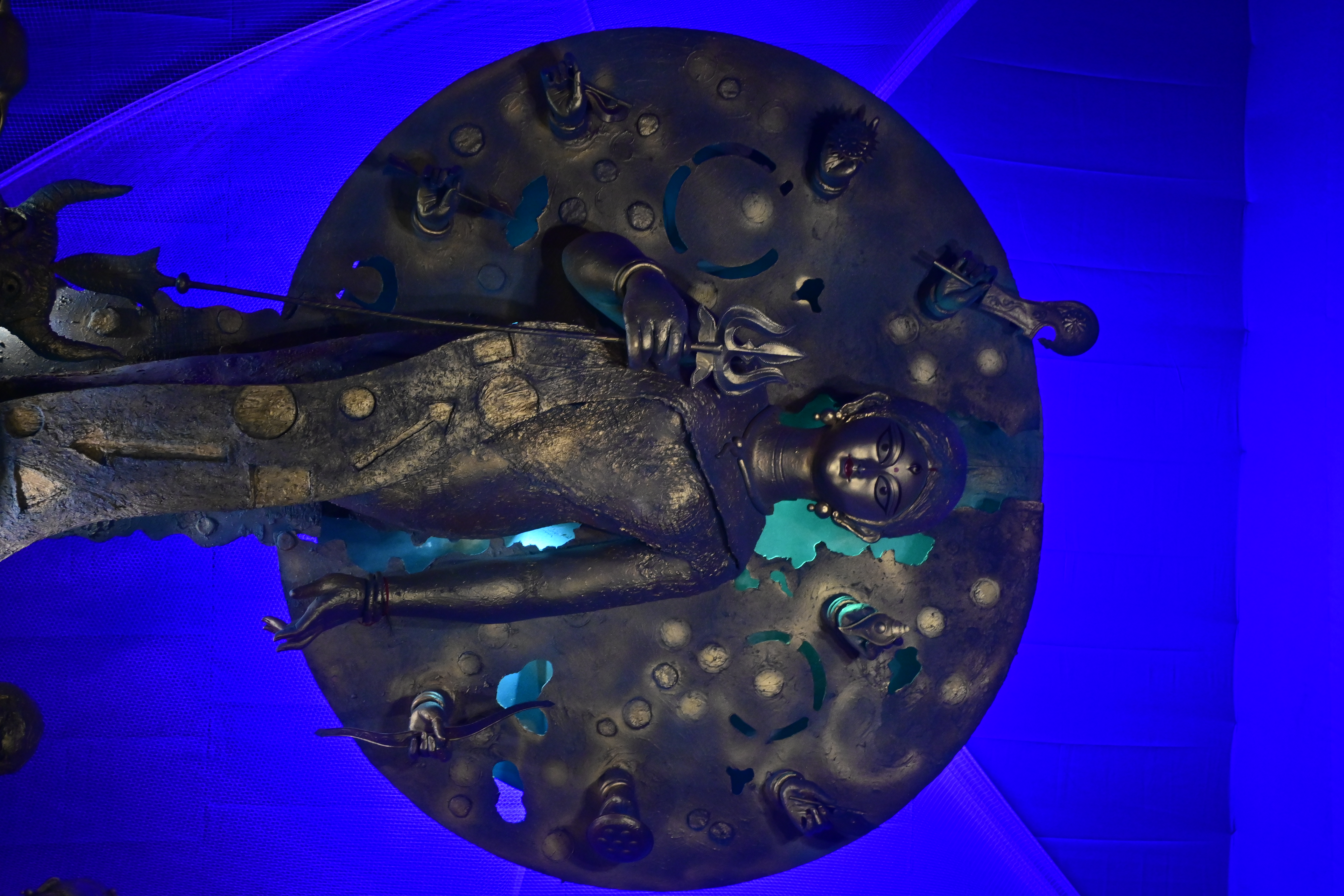
Traditionally, Durga idols followed classical iconography — the familiar ekchala structure, conventional facial features, and established proportions.
But once pandals and lighting became experimental, artists naturally began reimagining the deity too.
By the late 1980s and especially the 1990s, idol-making entered a bold modern phase:
- Folk-art inspired idols
- Abstract interpretations
- Tribal influences
- Minimalist structures
- Environmental themes
- Social commentary through sculpture
- Experimental textures using jute, metal, clay fragments, bamboo, and recycled materials
Kumartuli artisans adapted rapidly. What had once been hereditary craftsmanship evolved into collaborative contemporary art.
Traditional idol-makers began working alongside painters, architects, sculptors, theatre designers, and installation artists.
Durga Puja became one of the world’s largest annual public art festivals.
Durga Puja as Bengal’s Cultural Modernity
What makes Bengal unique is that innovation never fully replaced tradition.
Instead, Durga Puja created a rare balance:
- Ancient mythology with modern design
- Rituals with experimentation
- Community devotion with global aesthetics
- Handmade craftsmanship with technological creativity
This synthesis reflected Bengal’s broader identity during the post-independence decades.
Even during economic and political turbulence, Bengal continued exporting intellectual and artistic influence to the world:
- Cinema
- Literature
- Graphic arts
- Music
- Theatre
- Photography
- Public cultural discourse
Durga Puja became the most visible expression of this cultural confidence.
Every year, artists from ordinary neighborhoods transformed streets into museums accessible to everyone — regardless of class, language, or background.
Global Recognition and the UNESCO Era

Today, Durga Puja attracts global tourists, international media, photographers, designers, researchers, and cultural enthusiasts.
The festival’s recognition by UNESCO as an Intangible Cultural Heritage of Humanity was not merely about religion.
It acknowledged something much deeper: the extraordinary fusion of community participation, artistic innovation, craftsmanship, and cultural continuity.
Modern thematic pujas now incorporate:
- Projection mapping
- Sustainable architecture
- Interactive installations
- Sound design
- Digital lighting systems
- Global artistic collaborations
- Climate-conscious materials
Yet at its heart remains the same emotional center: Bengal’s collective creativity.
From Streets of Kolkata to the Global Stage
The story of modern Durga Puja is ultimately the story of Bengal itself.
A society that refused to separate art from public life.
A culture where electricians became visual storytellers, bamboo workers became spatial designers, and clay artisans became sculptural innovators.
From the first experimental pandals of the 1960s to today’s globally celebrated theme pujas, Bengal transformed a religious festival into one of humanity’s most remarkable public art movements.
And every autumn, when the lights glow across Kolkata and the dhak begins to echo through the streets, the city reminds the world that innovation is not always born inside galleries or corporations.
Sometimes, it is born in neighborhoods, workshops, and collective imagination.
That is the enduring magic of Durga Puja.